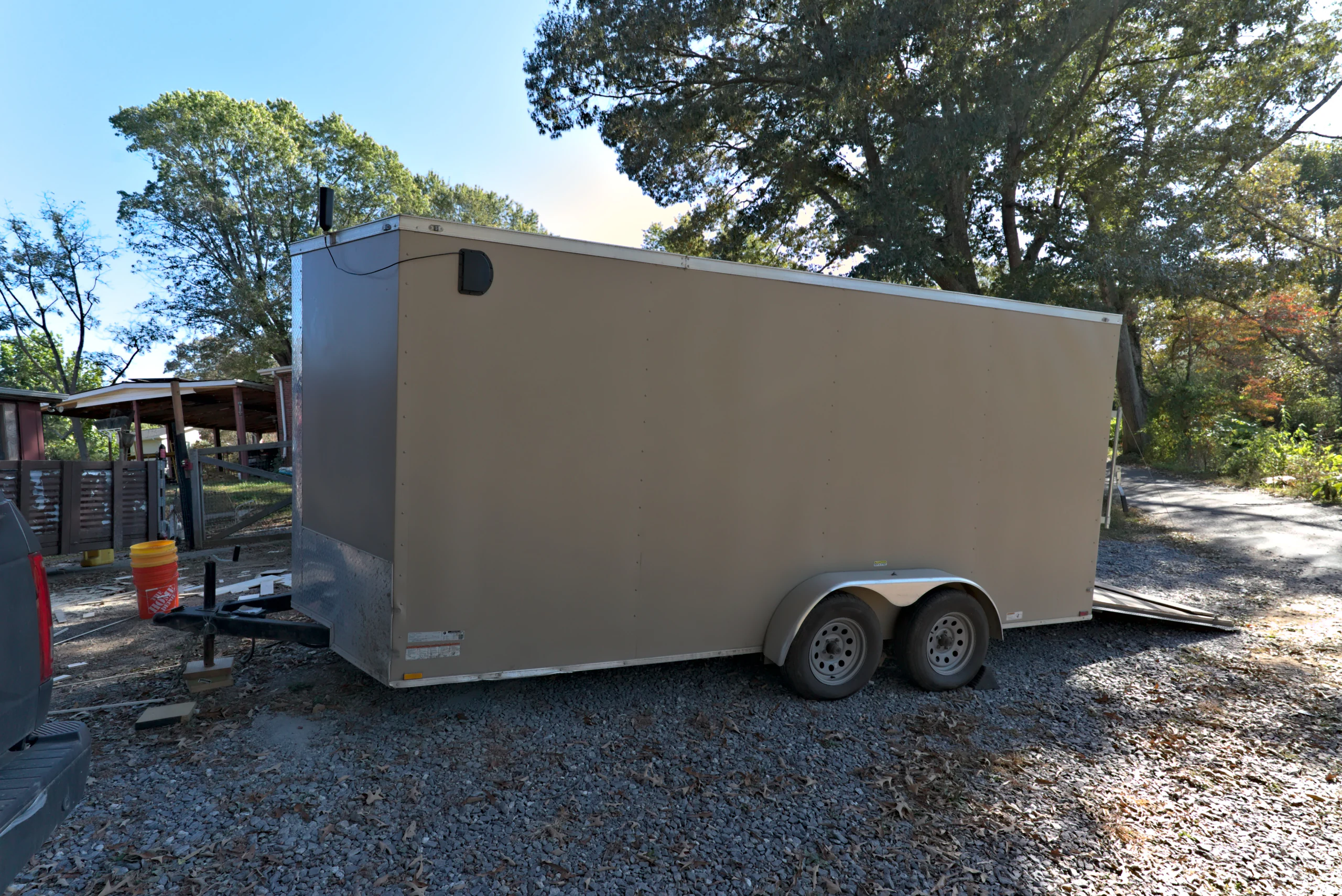
Biltout did not come from somewhere else. It started with Scott and Mike, a residential building operation in Western North Carolina, two trucks, a barn and the daily routine of loading and unloading both. The trailer they built to get out of that routine is the working prototype behind Biltout, and it is based in Candler, just west of Asheville.
If you build, remodel or run a crew in WNC, this page covers what you can see locally, how to ask for a visit, and the site questions that matter for a trailer in mountain country.
What is here
- The working prototype. A 7×16 V-nose enclosed trailer in daily use on our own residential jobs. It shows normal signs of use and is not a production unit.
- The people who built it. Coombs & Co is Scott and Mike. A tour is a conversation with them.
- The design work. The design visualizations on our homepage show the intended production layout; the prototype shows the idea after real use.
What is not here: a showroom, a dealer lot or production inventory. Biltout is one standardized 7×16 product, and the written offer confirms the final specification and terms before any binding order.
How to ask for a visit
- Use the inquiry form. On the homepage form, keep "In person in Candler" selected as your tour preference. The form opens an email draft for you to review and send; the page itself submits nothing.
- Tell us about your work. Trade, crew size, what you operate from now and where your day gets rebuilt, so the visit can be specific to you.
- We reply to arrange a time.
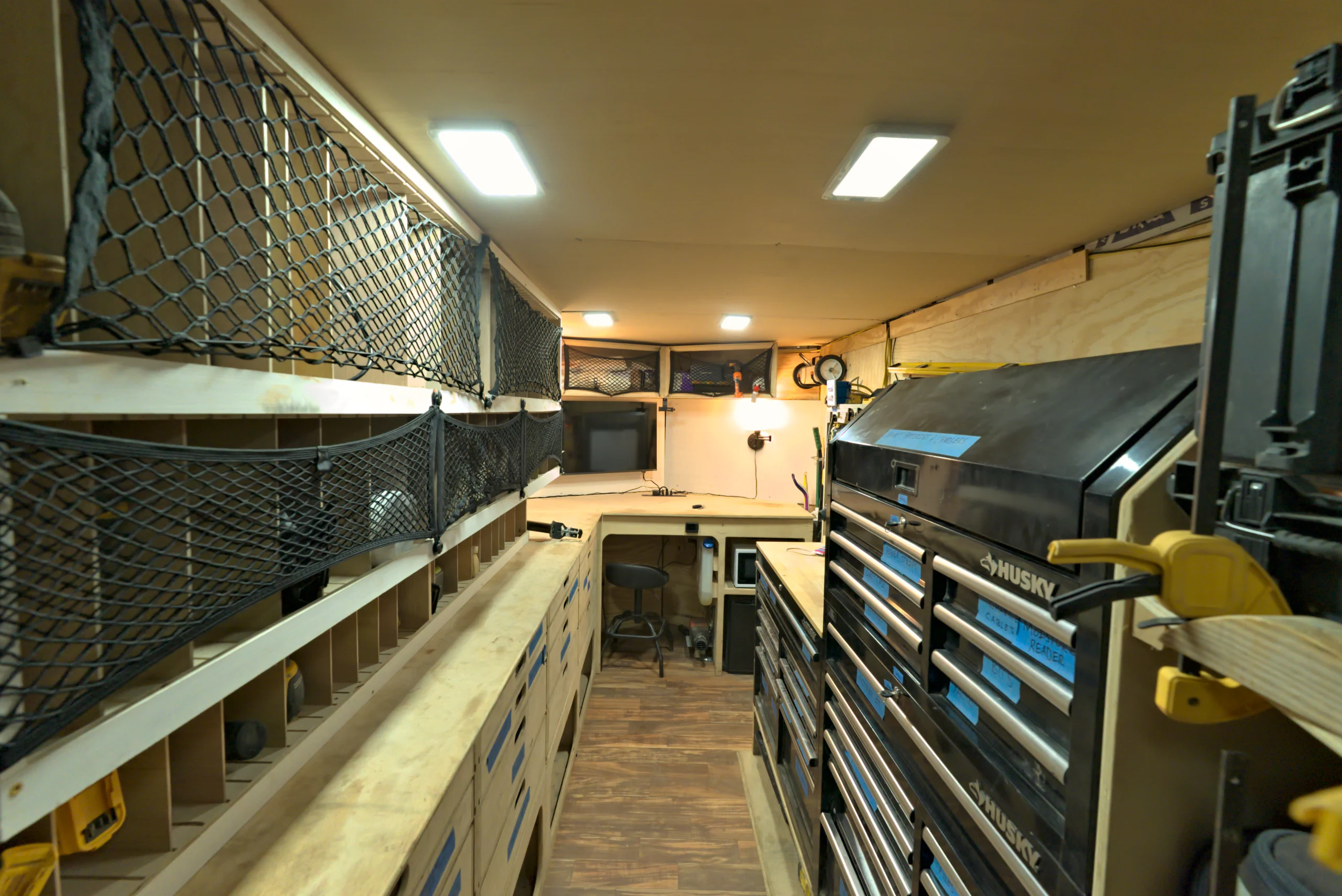
- Walk the aisle. Open the drawers, look at the long-item and ladder bays, and ask anything.
If Candler is not practical, choose "Start with video." The homepage also has an interactive 360° walkthrough of the prototype and a short field video.
What to bring
- A rough list of what your crew carries daily, or photos of your current truck beds, van or trailer.
- Your tow vehicle's year, make and model, and hitch details if you know them. We will not approve a vehicle from a model name, but it frames the conversation.
- A sense of your typical jobsites: steep or gravel drives, tight neighborhoods, long rural lanes.
What WNC sites ask of a trailer
These are questions to answer for your own sites, not product claims:
- Steep and unpaved drives. Can your tow vehicle and a loaded trailer get up, turn around and park level enough to work from? Check before the first day, not on it.
- Narrow roads and switchbacks. A 16-foot box plus a tow vehicle needs room. Plan the route, not just the destination.
- Gravel parking. Our prototype photos were taken on gravel. Think about chocks, ramp footing and keeping grit out of the aisle.
- Weather. Rain and cold make an enclosed, lit, insulated space more useful, and make anything left outside less so.
- Occupied homes. In lived-in houses, dust containment and clean daily access matter. Our trailer keeps dust-containment poles and a vacuum in fixed positions for that reason.
The fit and towing checklist turns these into a worksheet for any site.
Pickup and delivery
Factory pickup in Candler is the baseline, and delivery is quoted separately; the homepage ownership section states the current delivery terms. Delivery is not the same as onsite service coverage. Service and warranty terms are written into the offer.
Limits worth stating plainly
- We do not have inventory on hand.
- We have not published finished weight, tongue weight or tow-vehicle guidance for a production unit; those follow measurement.
- A trailer is not the right answer for every WNC contractor. Short service calls in tight Asheville neighborhoods may be better served by a van. See cargo van vs. enclosed trailer.
Next steps
New to the idea? Start with the mobile workshop trailer guide. To see how the prototype came together, read the prototype story; to budget, use the cost guide; or learn about Coombs & Co. When you are ready, ask for a tour.