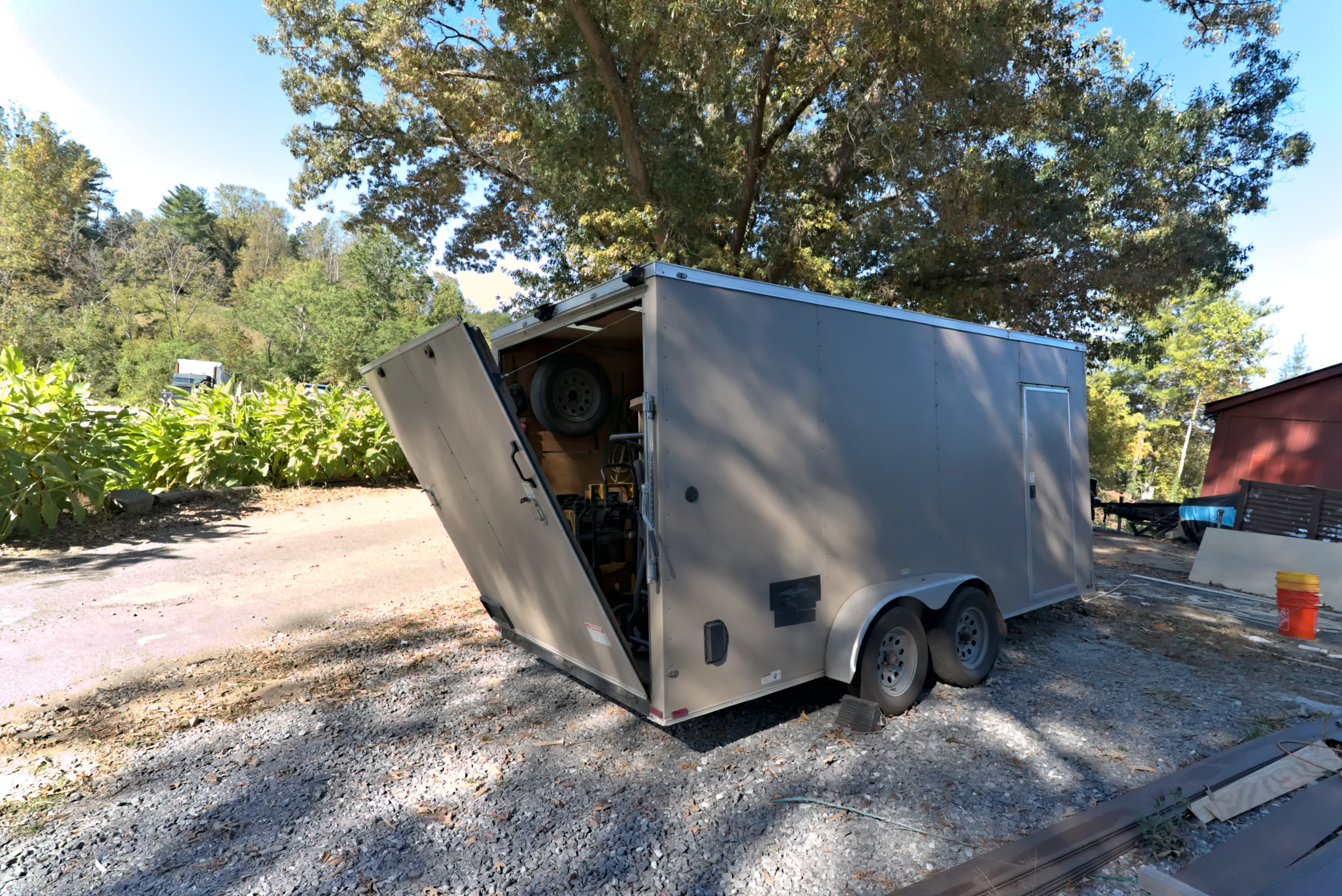
This is the checklist we would want a buyer to finish before talking seriously about any work trailer, including a Biltout. Each item is yes or no. A "no" or "not sure" is not a dead end, but resolve it before money changes hands.
One rule applies throughout: this page cannot approve your vehicle or your setup. Nobody can from a model name. Qualification has to verify the vehicle, hitch, payload, tongue allowance, brake controller and loaded configuration against the documented finished weight of the actual trailer.
1. Workflow
- I can list what leaves the vehicle at nearly every stop.
- My typical jobs last long enough for a parked base to matter (days or weeks, not minutes).
- The same core kit follows the crew from job to job.
- I know roughly how much time my crew spends loading, searching and resetting each day. (The homepage calculator measures your own numbers; it does not predict savings.)
- I know where store runs for forgotten items come from.
- I have filled in a zone worksheet from the layout guide.
2. Sites and parking
- My typical driveways and lots have room to pull in, turn and leave with a trailer attached.
- There is somewhere to park the trailer during the day that is allowed and does not block the work.
- Overhead clearance (branches, carports, garage entries) has been checked at typical sites.
- Steep, soft or gravel approaches have been considered for both the tow vehicle and the loaded trailer.
- The ramp or doors can open fully where the trailer will sit.
- I have a legal, secure place to keep the trailer overnight and between jobs.
3. Crew
- At least one person who will regularly tow is comfortable hitching, backing and parking a trailer.
- There is a backup driver when that person is out.
- Someone owns restocking and putting things back.
- The crew size and roles suit pulling from a shared kit.
4. Equipment
- I know which saws, cases, ladders and long items must travel.
- I know which items are heavy, and roughly where they would sit in the trailer.
- I know what needs charging, and how often.
- I have separated tools that must travel from tools that can stay home.
- I understand that tools shown in any trailer photos—including ours—are not part of the trailer.
5. Tow vehicle
Use your vehicle's own documentation—door-jamb labels, owner's manual and hitch labels—not a brochure or a forum post.
- Vehicle year, make, model, configuration and trim recorded.
- Manufacturer towing rating for this exact configuration found.
- Payload rating found, and today's typical load in the vehicle (crew, tools, materials) estimated.
- Rear axle and combined weight ratings found, if published.
- I understand that tongue weight counts against the vehicle's payload.
6. Hitch and brakes
- Receiver class and rating recorded from the hitch label.
- Ball mount and ball ratings match or exceed what is needed.
- Coupler size matches the trailer.
- A brake controller is installed (or planned) and suitable for the trailer's brakes.
- Safety chains, breakaway system and wiring connector have been checked.
7. Loaded configuration
- I will get the finished trailer weight and tongue weight from a scale, not an estimate.
- I will load the trailer the way it will actually travel before judging how it tows.
- I understand that moving heavy storage or equipment changes tongue weight.
- Combined weights stay within every rating in sections 5 and 6, with the loaded trailer, the crew and the cargo in the vehicle.
For Biltout specifically: final finished and tongue weights will be documented before a binding order. We have not published them because they have not been measured for a production unit, and we will not approve a tow vehicle by model name alone.
8. Documents to gather
- Tow vehicle door-jamb and towing labels (photos are fine).
- Hitch and ball mount labels.
- Brake controller make and model.
- Trailer VIN plate data and GVWR, once a specific trailer is identified.
- Scale tickets for the finished, loaded configuration.
- Insurance and registration requirements for your state.
If you are unsure about any rating, ask a qualified hitch installer or your vehicle dealer. Local rules and your documentation govern; this checklist does not replace them.
9. Security and weather
- I have a plan for locking and securing the trailer on site and overnight.
- I understand that locks and lighting add deterrence and visibility, but no trailer eliminates theft risk.
- I have checked my insurance coverage for the trailer and its contents.
- I have thought about how rain, cold and heat affect what is stored inside.
Reading your results
- Mostly yes in sections 1–4: a workshop trailer may fit your work. Finish sections 5–8 before buying.
- Several no's in sections 2 or 3: look hard at a van or other options. Read cargo van vs. enclosed trailer.
- Unknowns in sections 5–7: that is normal at this stage. Resolve them with real labels and scale weights before any binding commitment.
Next: understand the category, budget the full system with the cost guide, see how a van compares, or, if you are in Western North Carolina, read about visiting the prototype in Candler. When you are ready, start a conversation and include your tow vehicle details.